

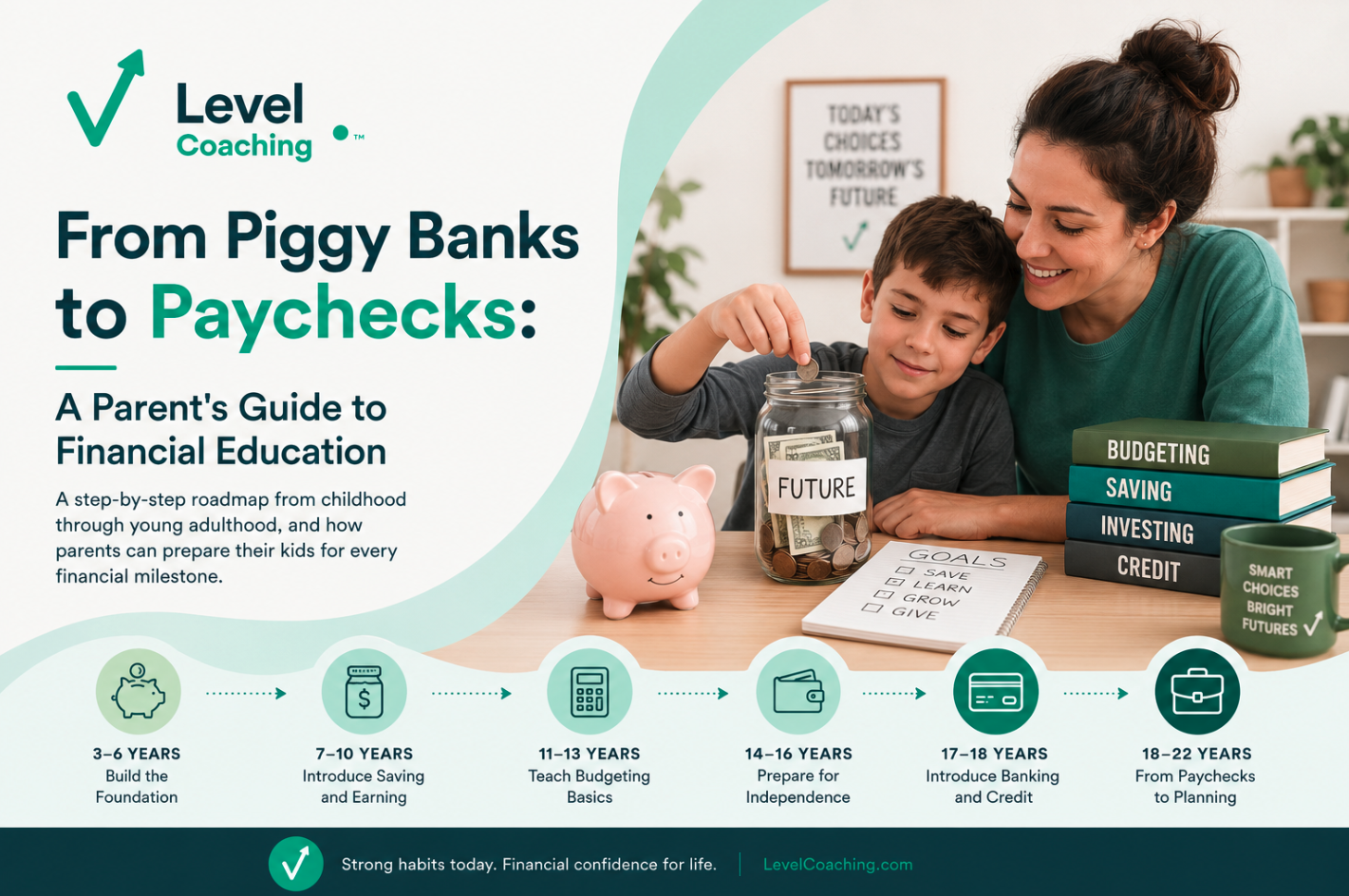
24 Jul From Piggy Banks to Paychecks: A Parent’s Guide to Financial Education
One of the greatest gifts parents can give their children isn’t found under the Christmas tree or wrapped in a birthday box—it’s financial confidence.
Money affects nearly every aspect of adult life, yet many young adults enter the real world without ever learning how to budget, save, use credit responsibly, or plan for the future. The good news is that financial literacy doesn’t have to be taught all at once. In fact, the most effective lessons happen gradually over the course of childhood.
Whether your child is five or fifteen, there are age-appropriate ways to build healthy money habits that can last a lifetime. Here’s a roadmap to help prepare your children for every financial milestone, from piggy banks to paychecks.
Ages 3–6: Build the Foundation
At this stage, children are naturally curious and eager to learn. While they won’t understand budgeting or investing, they can begin learning that money has value and is earned.
Start by introducing basic concepts through everyday experiences. Let them help count coins, identify different bills, or place money into a piggy bank. Explain that when money is spent on one thing, it can’t be spent on something else.
Rather than buying every toy they ask for, encourage them to save toward something they really want. Even waiting a few weeks helps teach patience and delayed gratification—one of the strongest predictors of long-term financial success.
The goal isn’t to teach complicated financial concepts. It’s simply to build a healthy relationship with money from the beginning.
Ages 7–10: Introduce Saving and Earning
As children grow, they become capable of understanding choices and consequences.
This is an excellent time to introduce an allowance or opportunities to earn extra money through age-appropriate chores. While many families have different philosophies about allowances, the key lesson is connecting effort with reward.
Help your child divide their money into simple categories:
- Spend
- Save
- Give
This approach teaches balance while encouraging generosity alongside financial responsibility.
If they want an expensive toy or game, resist the temptation to buy it immediately. Instead, help them create a savings goal and track their progress. Watching their savings grow creates excitement and ownership.
Ages 11–13: Teach Budgeting Basics
The middle school years are an ideal time to introduce budgeting.
Children this age begin making more independent purchasing decisions, whether it’s snacks, clothing, entertainment, or hobbies.
Help them create a simple monthly budget using any money they receive from allowances, gifts, or small jobs.
Discuss questions like:
- How much should be saved?
- How much is okay to spend?
- What happens if all the money is spent too quickly?
These conversations help children learn that budgeting isn’t about restrictions—it’s about making intentional choices.
This is also a great time to begin discussing advertising, impulse buying, and the difference between wants and needs.
Ages 14–16: Prepare for Financial Independence
Teenagers are approaching adulthood, making this one of the most important stages for financial education.
If your teen begins babysitting, mowing lawns, or working a part-time job, involve them in managing their earnings.
Teach them how to:
- Read a paycheck
- Understand taxes and deductions
- Set savings goals
- Track spending
- Build an emergency fund
Many parents also begin discussing larger financial topics like college costs, student loans, car expenses, and insurance.
Rather than shielding teenagers from financial conversations, include them in appropriate family discussions. Seeing how financial decisions are made helps prepare them for making their own.
Ages 17–18: Introduce Banking and Credit
As high school graduation approaches, it’s time to prepare your child for adult financial responsibilities.
Help them open a checking account and savings account if they don’t already have one.
Teach them how to:
- Use a debit card responsibly
- Monitor account balances
- Avoid overdraft fees
- Use online banking safely
This is also the perfect opportunity to explain how credit works.
Many young adults mistakenly believe credit cards are “free money.” Explain how interest works, how minimum payments can extend debt for years, and why paying balances in full is so important.
Understanding credit before they receive their first credit card can prevent costly mistakes later.
Ages 18–22: From Paychecks to Planning
Whether your child enters college, trade school, the military, or the workforce, financial independence begins during these years.
Now is the time to teach skills they’ll use every month.
Help them build a realistic budget that includes:
- Housing
- Transportation
- Food
- Savings
- Entertainment
- Debt payments
- Emergency savings
Encourage them to save a portion of every paycheck before spending anything else. Even small, consistent savings habits build long-term financial security.
If they begin contributing to a retirement account through an employer, explain the power of compound growth. Starting early can have an enormous impact over time.
Lead by Example
Children learn just as much from what they observe as from what they’re taught.
If they regularly hear arguments about money or see impulsive spending, those experiences shape their beliefs.
On the other hand, when they watch parents budget, save, discuss financial goals, and make thoughtful spending decisions, they begin to view those behaviors as normal.
You don’t have to be perfect.
In fact, talking openly about financial mistakes—and what you learned from them—can be one of the most valuable lessons you teach.
Make Money Conversations Normal
Financial education shouldn’t happen in one big lecture.
Instead, look for everyday teaching opportunities.
Talk about grocery shopping.
Compare prices.
Explain why you waited for something to go on sale.
Discuss why you chose one vacation over another or why you’re saving for a future goal.
The more comfortable children become talking about money, the more confident they’ll feel managing it as adults.
Final Thoughts
Financial literacy isn’t built overnight. It’s developed one conversation, one lesson, and one experience at a time.
By teaching children age-appropriate money skills throughout each stage of life, parents can help them avoid many of the financial struggles that adults commonly face. They won’t just learn how to earn money—they’ll learn how to manage it wisely, make informed decisions, and build a secure future.
At Level Coaching, we believe financial education should start early and continue throughout every stage of life. The habits children build today can become the foundation for a lifetime of financial confidence, independence, and success.
Written by Nichole Olds,
July 2026